Most farms do not think of termination records as a recruiting asset.
They think of them as paperwork. A compliance task. Something you document, file away, and hopefully never need again.
But after looking at real termination data from growers using Harvust, I have started to see those records very differently.
We analyzed thousands of employee terminations recorded by growers on Harvust. What stood out immediately was this:
👉 95.5% of those employees were marked eligible for rehire.
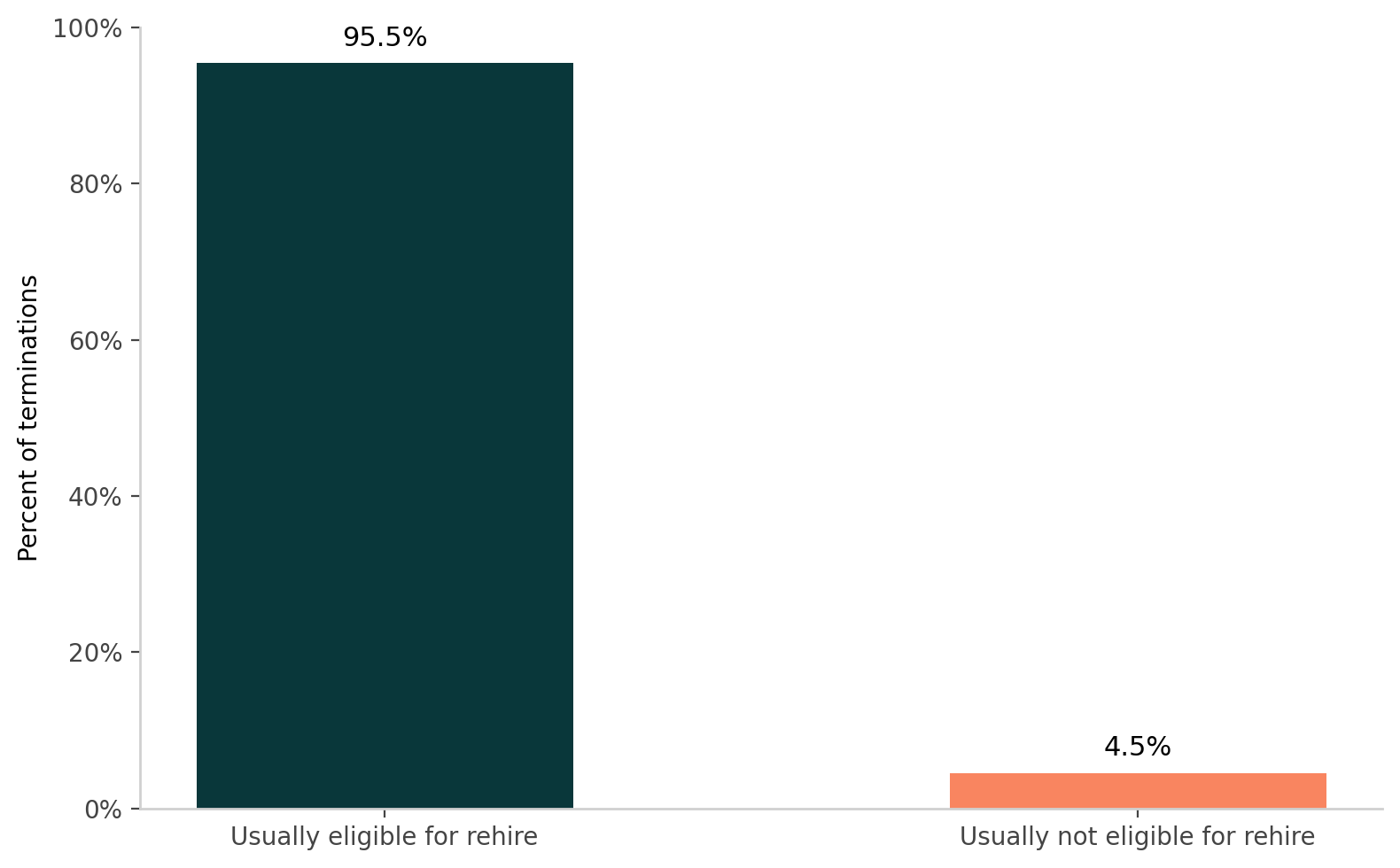
That number stopped me.
Because it points to something I have seen in the field for a long time: on farms, termination usually does not mean the relationship failed. It usually means a season ended, a contract ended, or a worker moved on for normal reasons.
And if that worker is still eligible for rehire, then that termination record is not just the end of a job.
It is a potential starting point for the next hiring cycle.
Most Farm Terminations Are Not What People Think
To most people, the word termination has a negative connotation. It sounds like something went wrong.
But that is not how it works on most farms.
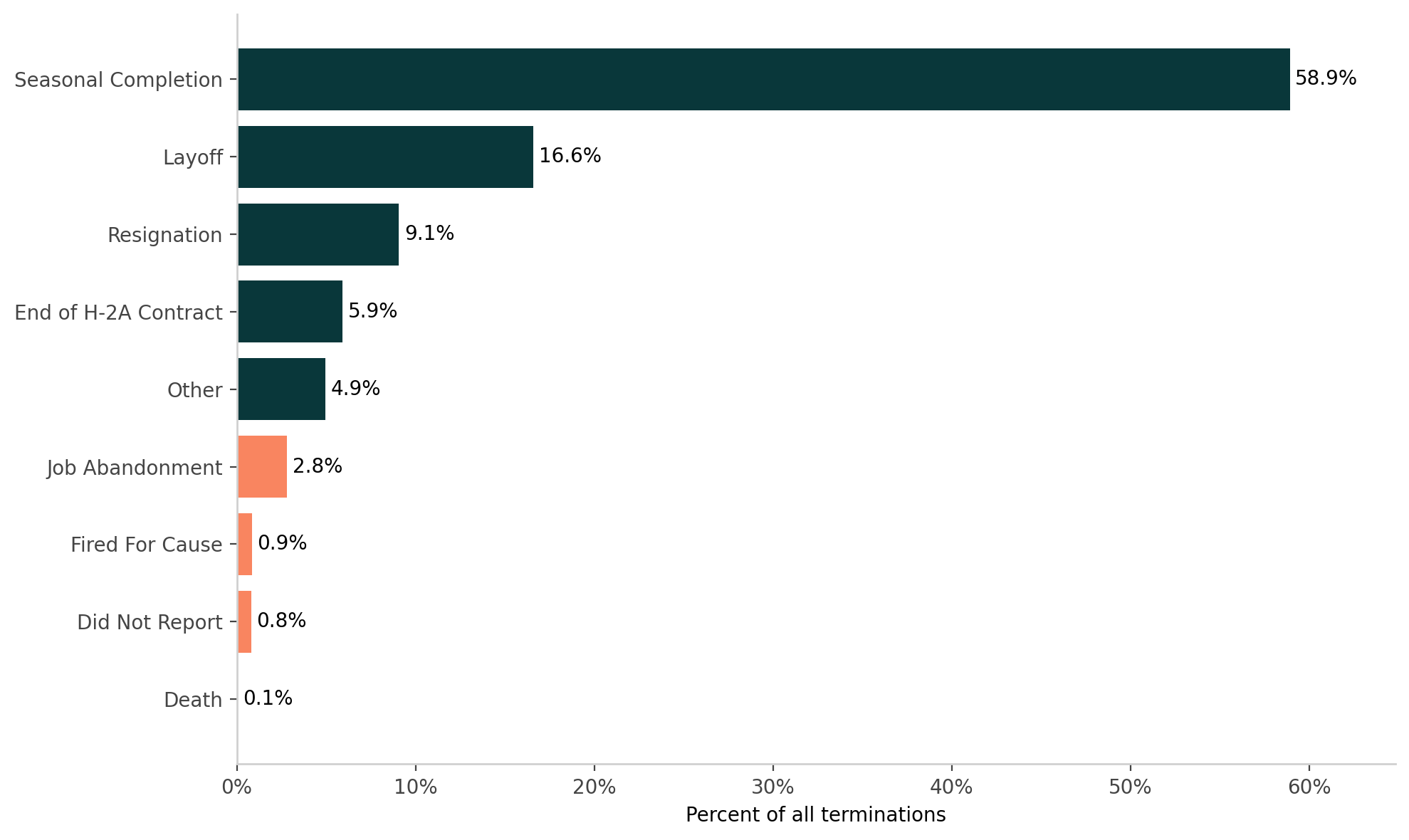
In the dataset we looked at, the largest termination categories were:
- Seasonal completion: 58.9%
- Layoff: 16.6%
- Resignation: 9.1%
- End of H-2A contract: 5.9% (a lot of H-2A workers are included in the above categories)
Together, those categories made up more than 90% of all terminations recorded.
That is not a story of instability. It is a story of how agricultural labor actually works.
A farm may have a great employee, a good working relationship, and every intention of bringing that person back. The job still ends. The record still needs to be created. The employee is still “terminated” in the system.
That is why I think a lot of farms are looking at termination tracking too narrowly. They see it as the last step in employment, when in reality it is often one of the first steps in future rehiring.
What Growers Are Really Recording
One of the things I found most interesting was how consistent growers were in the way they used termination types and rehire eligibility.
In this data, categories like seasonal completion, layoff, resignation, and end of H-2A contract were overwhelmingly associated with workers being eligible for rehire.
On the other hand, categories like job abandonment, fired for cause, and did not report were overwhelmingly associated with workers being marked ineligible.
That tells me growers are not just checking boxes. They are making a real judgment about the future value of that employee to the operation.
They are saying, in effect:
- this worker left under normal circumstances, we would bring them back
- or this worker left in a way that means we should not
That is incredibly valuable information.
But on a lot of farms, it never becomes useful because it gets buried in paper records, spreadsheets, or disconnected HR processes.
Why This Matters for Compliance
Part of the reason termination records get created in the first place is compliance.
Growers need to maintain organized records around employment decisions. They need consistent documentation of when a worker left, why they left, and whether they are eligible for rehire. If questions come up later, messy or inconsistent records create risk.
That is one thing I have seen growers improve by recording terminations in a structured way with Harvust's termination tracking tool.
When growers on Harvust use standardized termination types and capture rehire eligibility as part of the workflow, they create a cleaner record. That helps them be more consistent internally, and it gives them better documentation if they ever need to look back at a past decision.
But what I keep coming back to is this: the compliance value is real, yet it is only half the story.
Because once growers have that data captured cleanly, it becomes useful for something much bigger than recordkeeping.
It becomes useful for hiring.
The Recruiting Asset Most Farms Already Have
If 95.5% of terminated employees are eligible for rehire, then many farms are already sitting on a labor pool they know, trust, and may be overlooking.
These are not cold leads.
These are workers who already know the operation. Workers who have already been trained. Workers who supervisors have already seen on the job. Workers who, in many cases, left for completely normal reasons.
That is not just HR data.
That is a recruiting asset.
I think a lot of farms spend too much time thinking about recruiting as something that starts from zero each season. Post the job. Spread the word. Hope the right people show up.
But growers on Harvust are showing something different in the data: many of the workers you want next season may already be in your records from last season.
The challenge is not just identifying them.
The challenge is being able to reach them.
Why Messaging Matters So Much
This is where the opportunity gets practical.
When growers have clean termination records and know who is eligible for rehire, the next question is obvious: how do they reconnect with those workers efficiently?
That is where messaging becomes powerful.
One of the things I have seen growers do on Harvust is use our communication tools to stay connected with their workforce, rather than letting those relationships go cold the moment a season ends.
If you know which former employees are eligible for rehire, and you already have the ability to message workers through the same system you use to manage employment records, it becomes much easier to turn that information into action.
Instead of starting every recruiting cycle from scratch, you can start by reaching back out to workers who already know your farm.
That is faster. It is more efficient. And in many cases, it gives you a better chance of filling roles with people you already know are a fit.
What I Think Farms Should Take Away From This
The big thing I see in this data is that termination tracking should not be treated as dead-end paperwork.
It should be treated as both:
- a compliance record
- and a way to preserve future recruiting options
If a farm is tracking termination types consistently, documenting rehire eligibility clearly, and maintaining the ability to communicate with former workers, it is building something more valuable than a file cabinet full of past records.
It is building a reusable labor pipeline.
That matters in agriculture, where labor is seasonal, relationships matter, and a good rehire is often worth far more than an unknown new applicant.
The Bottom Line
When I looked at termination records from growers on Harvust, I did not see a story about workers leaving.
I saw a story about workers worth bringing back.
That is the opportunity hiding in termination records.
Yes, termination tracking helps with documentation and compliance. It creates cleaner records and better consistency around employment decisions.
But it can also do something else: it can help a farm identify who it should rehire and make it easier to reconnect with those workers when the time comes.
That is a much more valuable way to think about it.