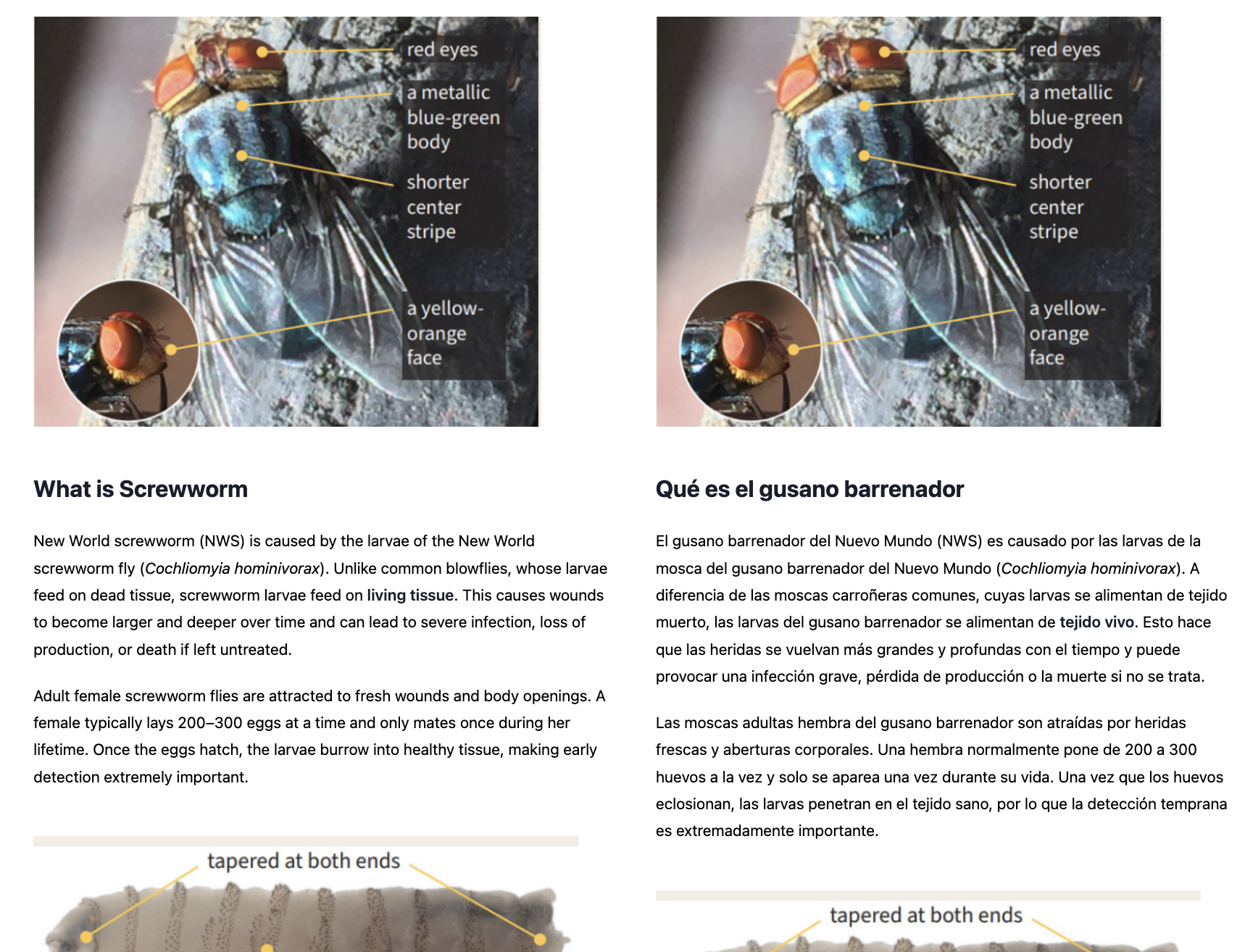
This training helps farm and ranch teams recognize, prevent, and respond to New World screwworm in cattle and other livestock. It covers how screwworm spreads, which wounds are most at risk, what symptoms to watch for, and when to escalate to a supervisor, veterinarian, or USDA reporting channel.
Use cases
- Train dairy, beef, and ranch employees to spot screwworm early in wounds, calving sites, navels, and post-procedure areas.
- Use during animal health, calf care, fly-control, or wound-care onboarding for livestock crews.
- Support biosecurity and herd health response planning when monitoring high-risk animals or suspicious maggot infestations.
Why it works
- Focuses on practical field signs farm workers can actually observe: enlarging wounds, foul odor, drainage, maggots, and abnormal animal behavior.
- Connects prevention to everyday livestock management, including injury reduction, wound protection, and fly control.
- Reinforces fast reporting and veterinary follow-up, which is critical for protecting the herd and meeting USDA screwworm reporting requirements.